Artificial intelligence is rapidly reshaping how we search, shop, and make decisions. As AI platforms like ChatGPT, Google Gemini, and others become everyday tools, a big question emerges:
What happens to advertising in an AI-driven world?
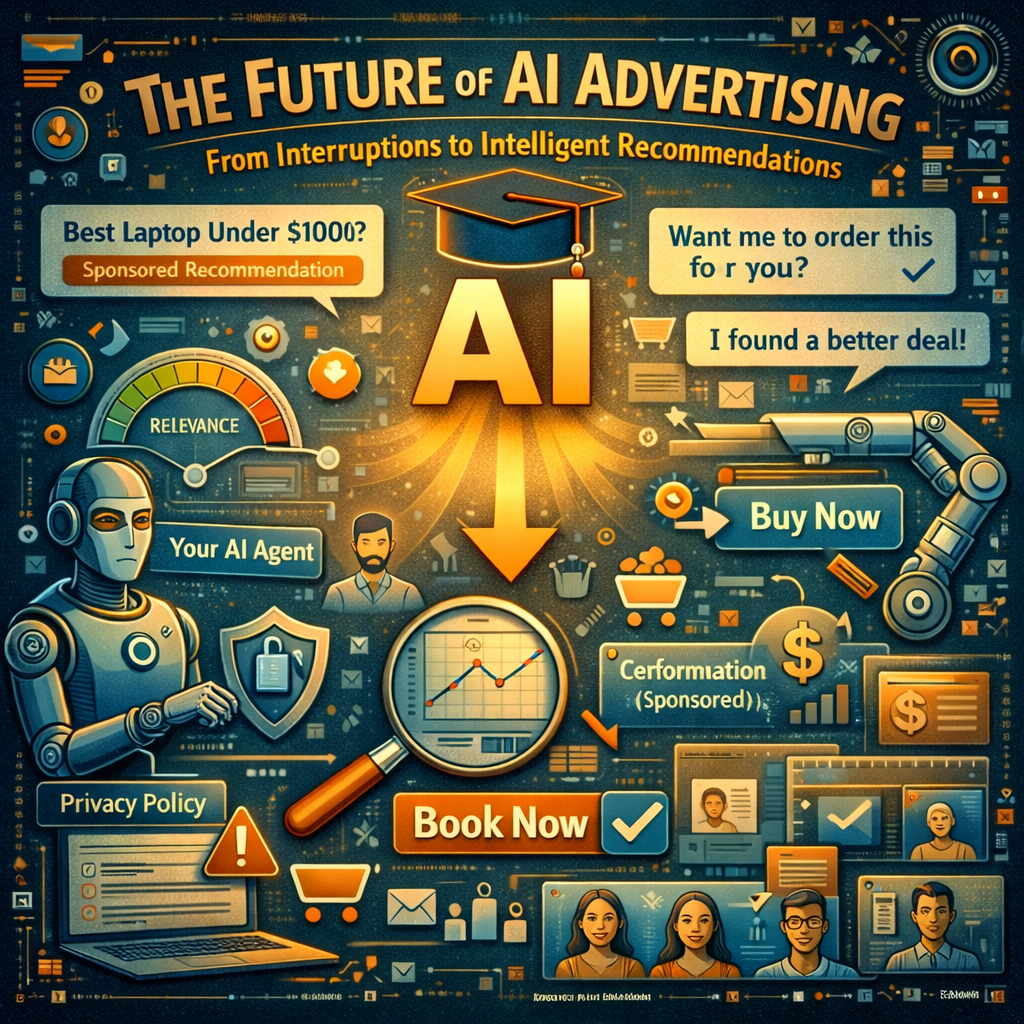
The answer isn’t just “more ads.” In fact, it’s the opposite. Advertising is being fundamentally redesigned—from disruptive banners to seamless, intent-driven recommendations.
Let’s explore how this shift is likely to unfold.
Advertising Will Become Part of the Answer
Traditional digital advertising lives around content—banner ads, pop-ups, sponsored links.
AI changes that entirely.
Instead of separating ads from content, AI platforms will embed sponsored recommendations directly into responses. For example:
A user asks, “What’s the best laptop under $1,000?”
The AI provides a curated list—potentially including one or two clearly labeled sponsored options.
This approach makes ads feel less like interruptions and more like useful suggestions.
Hyper-Personalization Will Reach a New Level
AI systems understand users with far greater depth than traditional platforms. They can factor in:
• Real-time intent
• Past interactions and preferences
• Context across conversations
This leads to advertising that is:
• Highly relevant
• Timely
• More likely to convert
Instead of showing many irrelevant ads, AI may show one highly relevant recommendation at the perfect moment.
The Role of Google Ads and Microsoft Ads
AI won’t replace existing ad ecosystems—it will transform them.
Google Ads and Microsoft Ads are likely to evolve from keyword-based systems into AI-driven recommendation engines:
• Ads will shift from search results into AI-generated answers
• Bidding will move from keywords to user intent and outcomes
• Winning won’t mean ranking #1—it will mean being selected by the AI
Microsoft has a unique advantage through Copilot and its integration into tools like Windows and Office, enabling ads to appear inside workflows, not just search.
Google, meanwhile, will integrate ads into AI Overviews and Gemini, turning its ad platform into a system that powers sponsored recommendations within answers.
The result:
Fewer ad slots, but much higher value per placement
Social Advertising in the Age of AI (Meta and Beyond)
Social platforms—especially Meta—will play a major role by turning AI into a discovery and influence engine, not just a response tool. Unlike search-based AI, Meta sits on vast behavioral and interest data, allowing it to deliver proactive, AI-curated recommendations inside feeds, messages, and even conversations. Expect ads to become more native and personalized, blending into content as AI predicts what users might want before they search. Meta’s advantage lies in combining generative AI with its social graph—enabling ads that feel like organic suggestions from your network, powered by both data and AI.
The Rise of Conversational Commerce
AI platforms won’t just recommend products—they’ll help you act on those recommendations instantly.
• You ask for suggestions
• The AI compares options
• It finds deals
• Then asks: “Want me to order this for you?”
This turns AI into a full-funnel experience:
Discovery → Decision → Purchase
All in one interaction.
A Shift to Performance-Based Advertising
AI platforms will likely move toward performance-based models, where advertisers pay for:
• Purchases
• Bookings
• Leads
This creates better alignment:
• Users get better recommendations
• Platforms get paid for outcomes
• Brands compete on value, not just visibility
Trust Will Become the Most Valuable Currency
AI platforms act more like advisors than search engines. That makes trust essential.
To maintain credibility, platforms will need to:
• Clearly label sponsored content
• Limit ad frequency
• Avoid misleading promotions
If trust is lost, users leave.
Advertising to AI Agents, Not Humans
As AI agents become more autonomous:
• They will compare options
• Negotiate deals
• Filter out low-quality brands
This means businesses will increasingly market to AI decision-makers, not just people.
New Ad Formats Built for AI
AI platforms will introduce new formats like:
• Sponsored recommendations in answers
• Action-based prompts (“Book now”)
• Interactive product experiences
• Real-time personalized bundles
The Core Tension: Utility vs. Monetization
AI platforms must balance:
• User trust
• Revenue generation
Too many ads break trust. Too few weaken the business model.
The winners will treat advertising as useful guidance—not interruption.
Final Thoughts
Advertising in AI platforms won’t disappear—it will evolve.
We’re moving toward a model that is:
• Less visible, but more influential
• More personalized, but more accountable
• Focused on outcomes, not attention
In the end, ads won’t feel like ads.
They’ll feel like recommendations—with incentives behind them.