A major change is coming to higher education in 2026 — and it could redefine how millions of Americans prepare for careers.
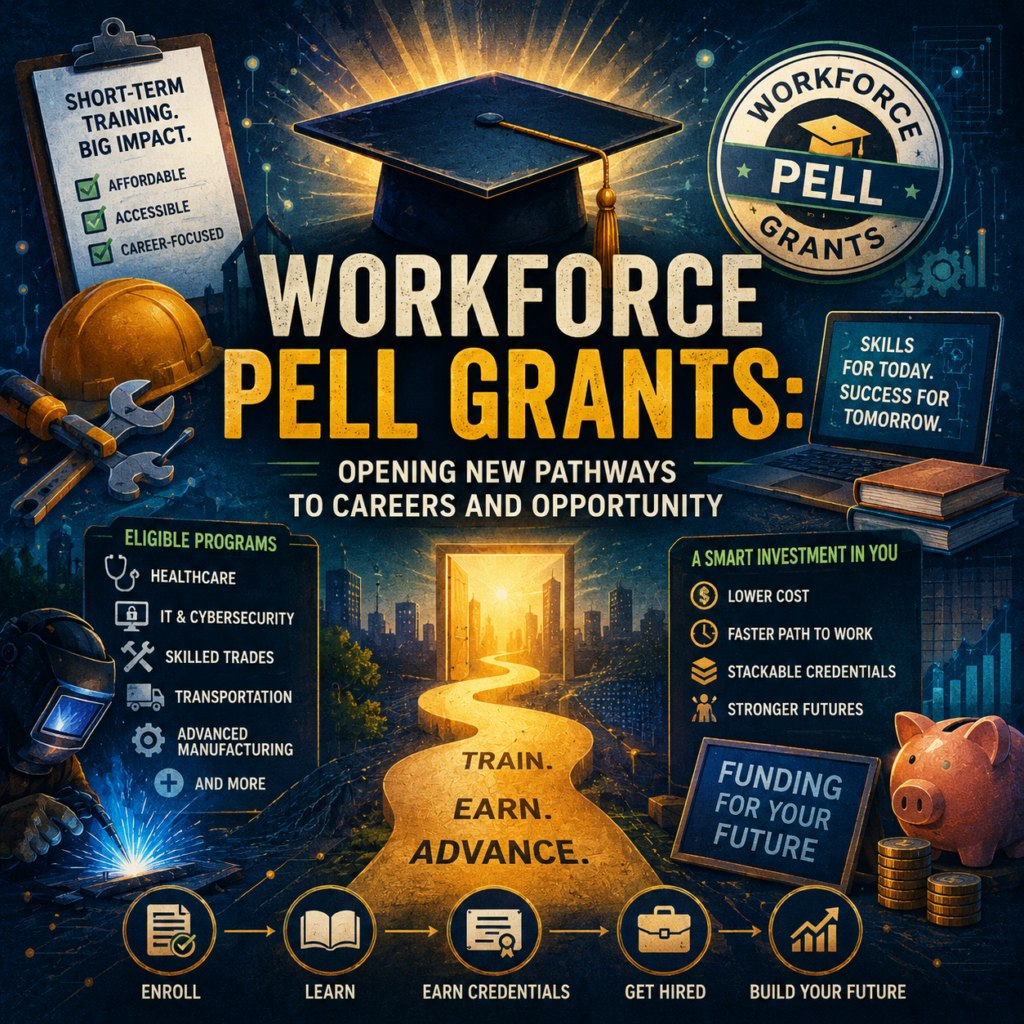
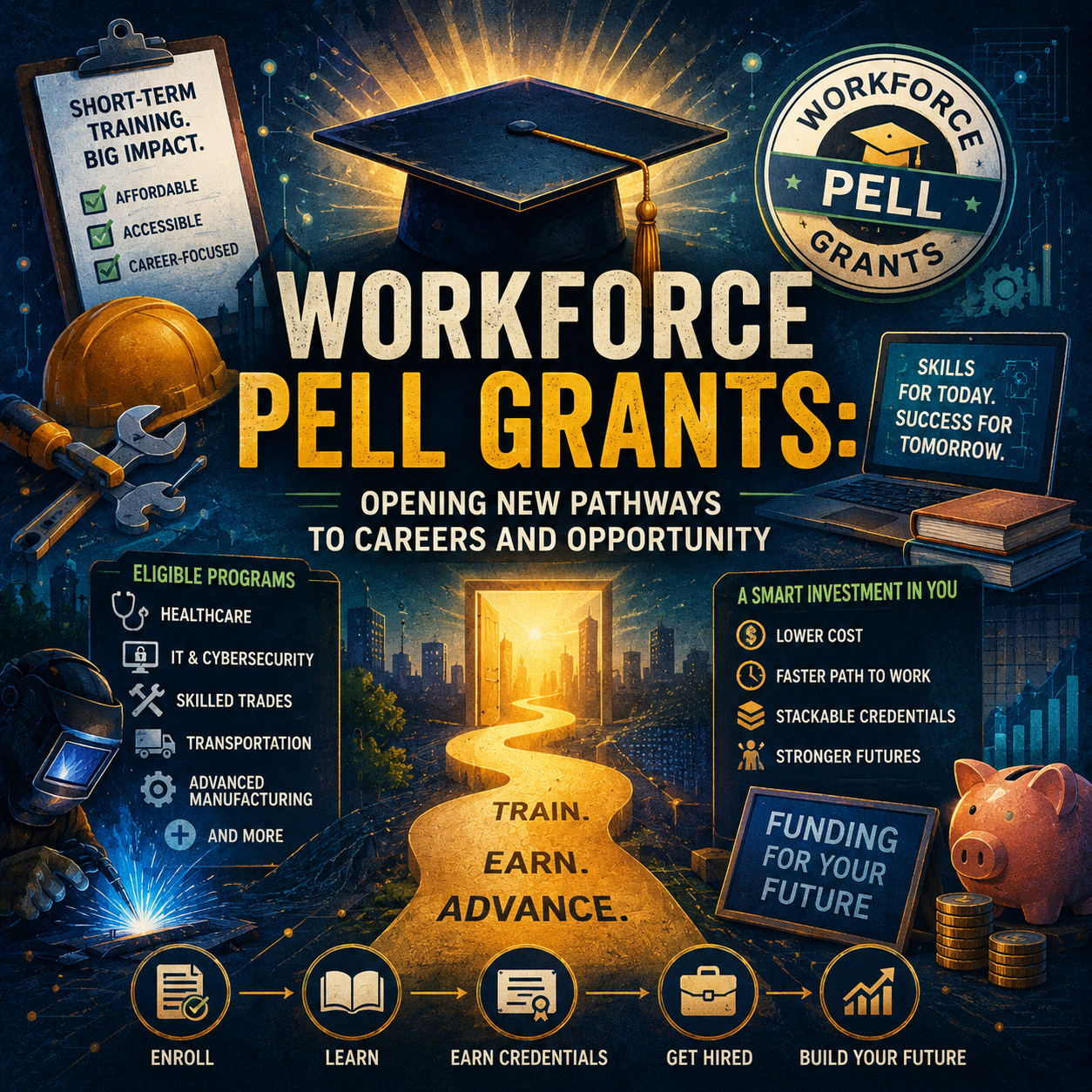
For the first time, federal Pell Grants will be expanded to cover short-term workforce training programs, opening financial aid access to students pursuing fast, career-focused credentials instead of traditional two- or four-year degrees. Known as “Workforce Pell,” the program is being described as one of the largest shifts in federal education funding in decades.
The move reflects a growing reality in today’s economy: many high-demand jobs no longer require a traditional college pathway, but they do require specialized skills, certifications, and hands-on training.
And education institutions are paying attention.
What Are Workforce Pell Grants?
Traditionally, Pell Grants have only been available for programs lasting at least 15 weeks or 600 clock hours. That excluded many shorter workforce programs such as:
- HVAC certifications
- Welding programs
- Cybersecurity bootcamps
- Truck driving schools
- Healthcare technician training
- IT support certifications
Beginning in July 2026, eligible programs as short as 8 weeks and 150 clock hours may qualify for federal Pell Grant funding.
The goal is straightforward:
- Reduce barriers to career training
- Help workers reskill faster
- Align education more closely with labor market demand
- Create lower-cost alternatives to traditional degrees
For many students, this could mean entering the workforce faster with significantly less debt.
Why This Matters Right Now
The timing is not accidental.
The workforce is changing rapidly due to:
- Artificial intelligence
- Automation
- Skilled labor shortages
- Rising college costs
- Employer demand for practical skills
At the same time, many students are questioning whether a traditional four-year degree always provides the best return on investment.
Workforce Pell grants represent a broader shift toward skills-based education — an approach that prioritizes employability, adaptability, and real-world training.
This doesn’t mean college is disappearing. It means education is becoming more flexible.
The Rise of “Stackable” Learning
One of the most important aspects of Workforce Pell is that many eligible programs must connect to future educational pathways.
In other words, these programs are designed to be “stackable”:
- A short-term certification can lead to an advanced credential
- Advanced credentials can later connect to degrees
- Students can continue building education over time instead of following one rigid path
This model reflects how modern careers increasingly work:
- Continuous learning
- Upskilling
- Career pivots
- Lifelong education
The traditional “one degree for life” model is fading. Workforce Pell acknowledges that reality.
A Big Opportunity for Community Colleges and Trade Programs
Community colleges, technical schools, and workforce training centers may benefit most from this expansion.
These institutions already specialize in:
- Career readiness
- Hands-on training
- Employer partnerships
- Flexible scheduling
- Affordable education
Many are now redesigning programs to meet Workforce Pell eligibility requirements, including stronger accountability measures around:
- Completion rates
- Job placement outcomes
- Earnings potential
Programs will need to prove they actually help students secure meaningful employment.
That accountability could become one of the program’s most important features.
The Education Debate: Speed vs. Depth
Not everyone sees Workforce Pell as a perfect solution.
Critics worry that focusing too heavily on short-term job training could narrow education into purely workforce preparation. Some educators argue that colleges also play a vital role in:
- Critical thinking
- Civic engagement
- Communication skills
- Creativity
- Personal development
Others worry that lower-quality programs could emerge simply to capture federal funding.
That’s why the proposed rules include strict oversight requirements, including:
- State approval
- Federal review
- Employment outcome tracking
- Earnings benchmarks
- Completion standards
The challenge moving forward will be balance:
How do we create faster pathways to employment without sacrificing educational quality?
What This Means for Students
For students, Workforce Pell may create entirely new educational possibilities.
Instead of choosing between:
- A four-year degree
or - No postsecondary education at all
Students may now have a third option:
Affordable, targeted career training with immediate workforce relevance.
This could especially benefit:
- Adult learners
- Career changers
- Working parents
- Low-income students
- Students hesitant about large student loans
In many ways, Workforce Pell reflects a broader transformation happening across education:
Students increasingly want learning that is flexible, practical, affordable, and connected directly to opportunity.
Final Thoughts
The expansion of Workforce Pell Grants signals more than just a financial aid change — it signals a cultural shift in how America views education itself.
For decades, higher education largely centered around traditional degrees. But today’s economy demands faster adaptation, lifelong learning, and multiple pathways to success.
The future of education may not be about choosing between college or career training.
It may be about creating systems that successfully combine both.
And Workforce Pell could be one of the first major steps in that direction.