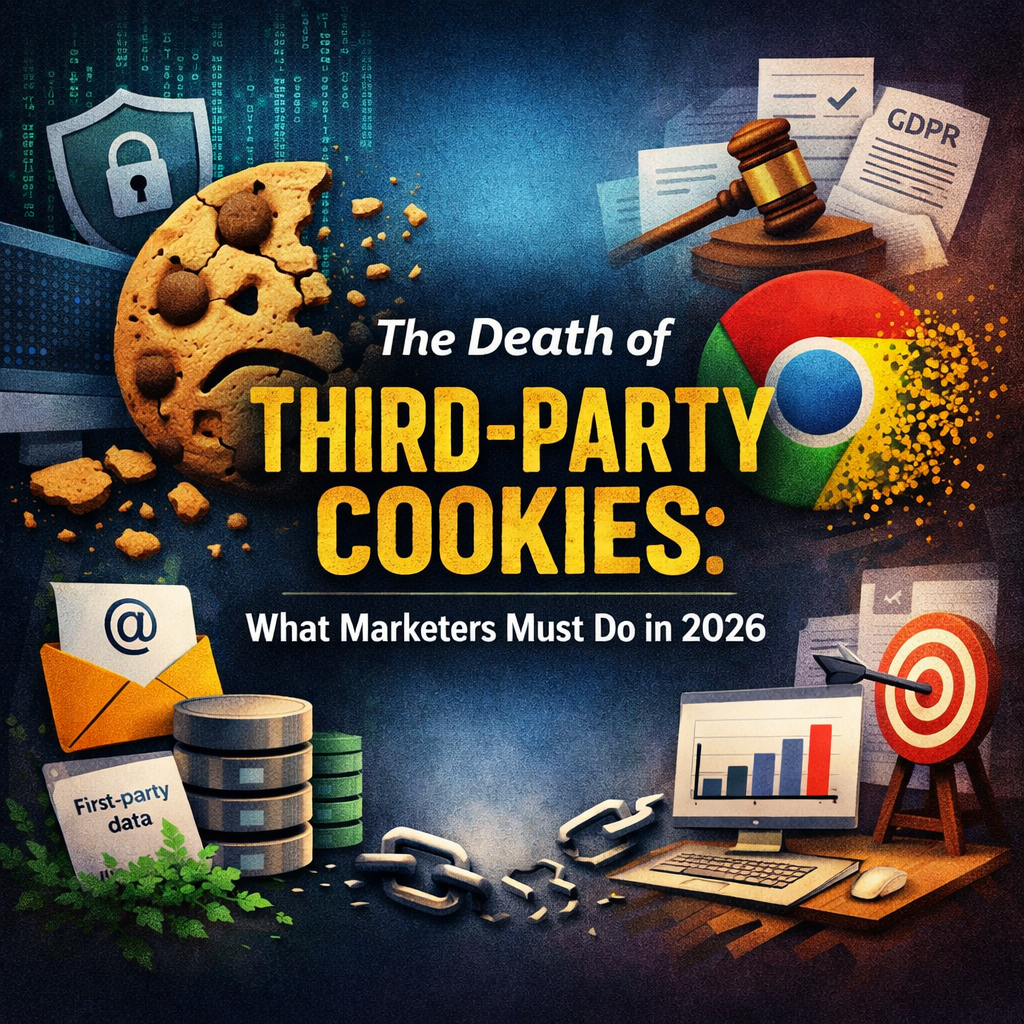
For years, third-party cookies powered the backbone of digital advertising—tracking users, targeting ads, and measuring performance across the web.
That era is ending.
With increasing privacy regulations, browser restrictions, and consumer awareness, marketers are being forced to rethink how they collect data and connect with audiences. If your strategy still relies heavily on third-party cookies, you’re already behind.
Here’s what’s changing—and what you need to do about it.
What’s Actually Happening to Third-Party Cookies?
Major browsers have been phasing out third-party cookies:
- Safari and Firefox already block them by default
- Google Chrome (the last major holdout) is completing its phase-out
At the same time:
- Privacy laws (GDPR, CCPA, etc.) are tightening
- Users are more conscious about tracking
- Platforms are limiting data sharing
Bottom line: Passive tracking is disappearing.
Why This Matters for Your Marketing
Without third-party cookies, you lose:
- Cross-site tracking
- Precise retargeting capabilities
- Detailed attribution models
- Audience data from external sources
This impacts:
- Paid ads performance
- Conversion tracking accuracy
- Personalization at scale
Many marketers are already seeing:
- Higher acquisition costs
- Less reliable analytics
- Smaller retargeting audiences
The Shift to First-Party Data
The future of marketing is data you own.
First-party data is collected directly from your audience:
- Website interactions
- Email subscribers
- CRM data
- Purchase history
Why it matters:
- More accurate
- Privacy-compliant
- Fully under your control
5 Strategies to Win in a Cookieless World
1. Build Your Email List Aggressively
Your email list is now one of your most valuable assets.
Focus on:
- Lead magnets (guides, templates, tools)
- Clear value exchange
- Strong landing pages
2. Invest in High-Quality Content
Content is no longer just for SEO—it’s for data capture and trust.
Create:
- In-depth blog posts
- Gated resources
- Educational content that drives signups
3. Use Server-Side Tracking
Client-side tracking is becoming unreliable.
Switch to:
- Server-side tagging (Google Tag Manager server-side)
- Enhanced conversions
- First-party tracking setups
This improves data accuracy and future-proofs analytics.
4. Leverage Owned Channels
Rely less on rented platforms.
Double down on:
- Email marketing
- SMS (where appropriate)
- Private communities (Slack, Discord, etc.)
5. Rethink Paid Advertising
Paid ads still work—but the approach must evolve.
Focus on:
- Contextual targeting instead of behavioral
- First-party audiences (email uploads, CRM lists)
- Creative quality over hyper-targeting
Measurement Is Changing Too
Attribution is getting less precise—and that’s okay.
Shift toward:
- Blended attribution models
- Incrementality testing
- Marketing mix modeling (MMM)
Stop obsessing over perfect tracking—it doesn’t exist anymore.
The Opportunity Most Marketers Are Missing
This shift isn’t just a challenge—it’s an advantage.
Brands that win will:
- Build direct relationships with their audience
- Prioritize trust and transparency
- Create real value instead of relying on tracking shortcuts
While others scramble to replace cookies, you can build a stronger, more sustainable marketing engine.
Final Thoughts
The death of third-party cookies marks a fundamental shift in digital marketing.
The question isn’t whether you’ll adapt—it’s how fast.
Start focusing on:
- First-party data
- Owned audiences
- Better content and experiences
Because in 2026, the brands that own their audience will own their future.