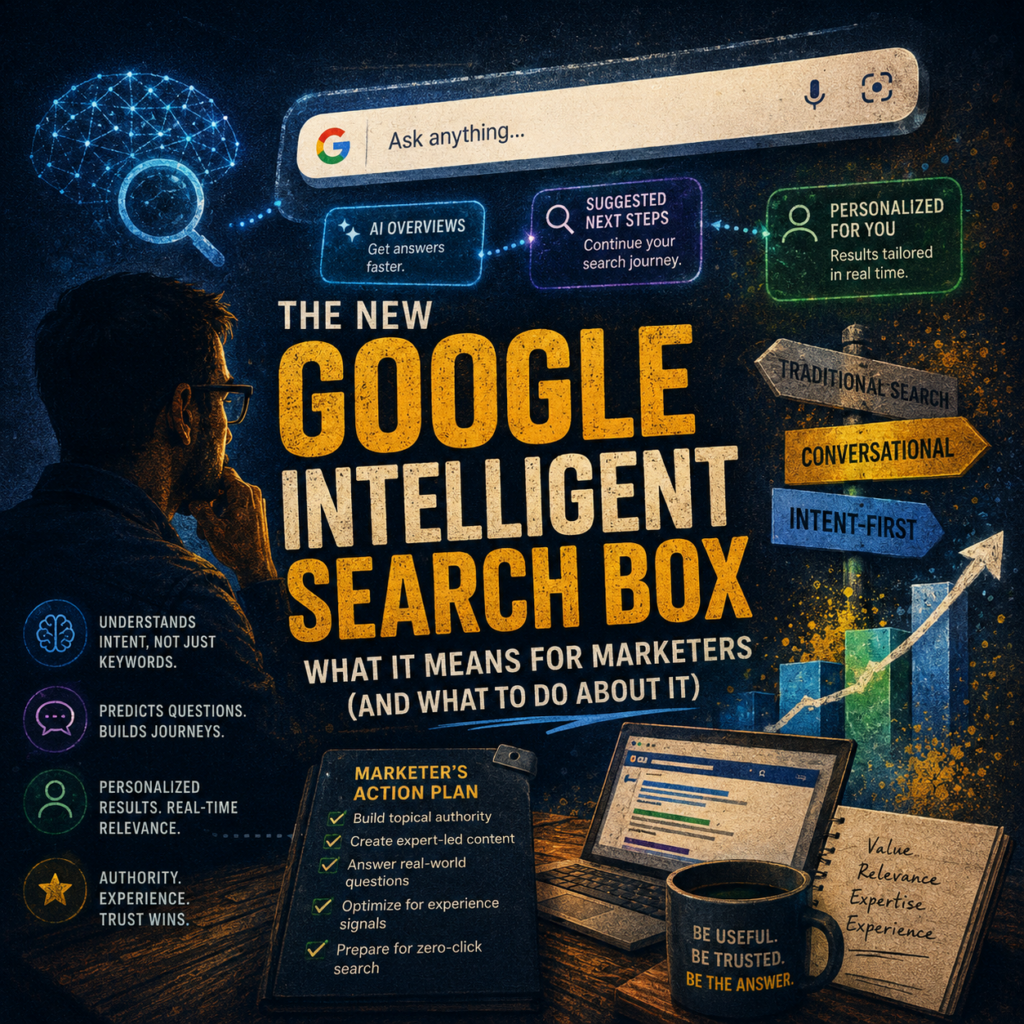

Over the past year, a subtle but important shift has been happening across major ad platforms. Google, Meta, and others aren’t just changing targeting options — they’re changing how decisions get made.
Instead of advertisers explicitly telling platforms who to target, platforms are increasingly interpreting intent, behavior, and creative signals on their own. The result is a new performance reality where systems matter more than settings.
For most brands this shift has real implications.
What Changed (and Why It Matters)
Recent updates across paid platforms point in the same direction:
- Broader audience definitions
- More automated optimization
- Fewer manual targeting levers
- Greater emphasis on creative, data signals, and outcomes
This isn’t platforms “taking control away”, It’s platforms demanding better inputs.
Search Still Captures Intent — But Context Is Expanding
Search remains the clearest signal of demand. But platforms now weigh:
- Landing page relevance
- Conversion behavior quality
- Post-click engagement
- Down-funnel outcomes
For Weboganic clients, that means Search Marketing can’t live in isolation. It must be aligned with:
- Lead quality
- Follow-up speed
- Conversion feedback loops
Intent still wins — but only when the system supports it.
Social + CTV Are No Longer Just Awareness Channels
Social Media Marketing and CTV have quietly evolved.
They now influence:
- Who platforms decide is high value
- How future impressions are priced
- Which users get retargeted downstream
When social and video creative reflects real intent, real outcomes, and real clarity, it trains the algorithm — even before a form fill happens.
Lead Management Is the New Optimization Lever
As platforms rely less on explicit targeting, they rely more on results.
That makes Lead Generation and Lead Management more important than ever:
- Fast response times
- Accurate qualification
- Clear conversion events
- CRM feedback into platforms
In other words: the algorithm is watching what happens after the click.
Email & Database Marketing Close the Loop
Owned data now plays a larger role in paid performance than many brands realize.
Email & Database Marketing help:
- Re-engage prospects platforms deprioritize
- Create cleaner conversion signals
- Feed higher-quality data back into paid channels
- Reduce dependency on platform guesswork
Owned systems stabilize paid systems.
Why This Matters for High-Intent Verticals
- Higher Education: Enrollment success now depends on how well platforms see application quality, not just inquiry volume.
- Transportation/CDL: Hiring velocity and completion matter more than lead count.
- Legal: Case fit and signed clients matter more than form fills.
- Home Services: Repeat business and job completion shape future acquisition efficiency.
The platforms are watching outcomes — whether you are or not.
The Takeaway
Paid media hasn’t become less controllable, it’s become more interpretive.
Brands that win in this environment don’t chase settings — they build systems:
- Aligned messaging
- Clean lead flows
- Fast follow-up
- Measurable outcomes
- Strong owned data
That’s where Weboganic operates — not at the tactic level, but at the system level.
Short Summary
Ad platforms are shifting from explicit targeting to interpretation. Learn why outcomes, lead quality, and connected systems now matter more than manual controls — and how Weboganic helps high-intent brands adapt.