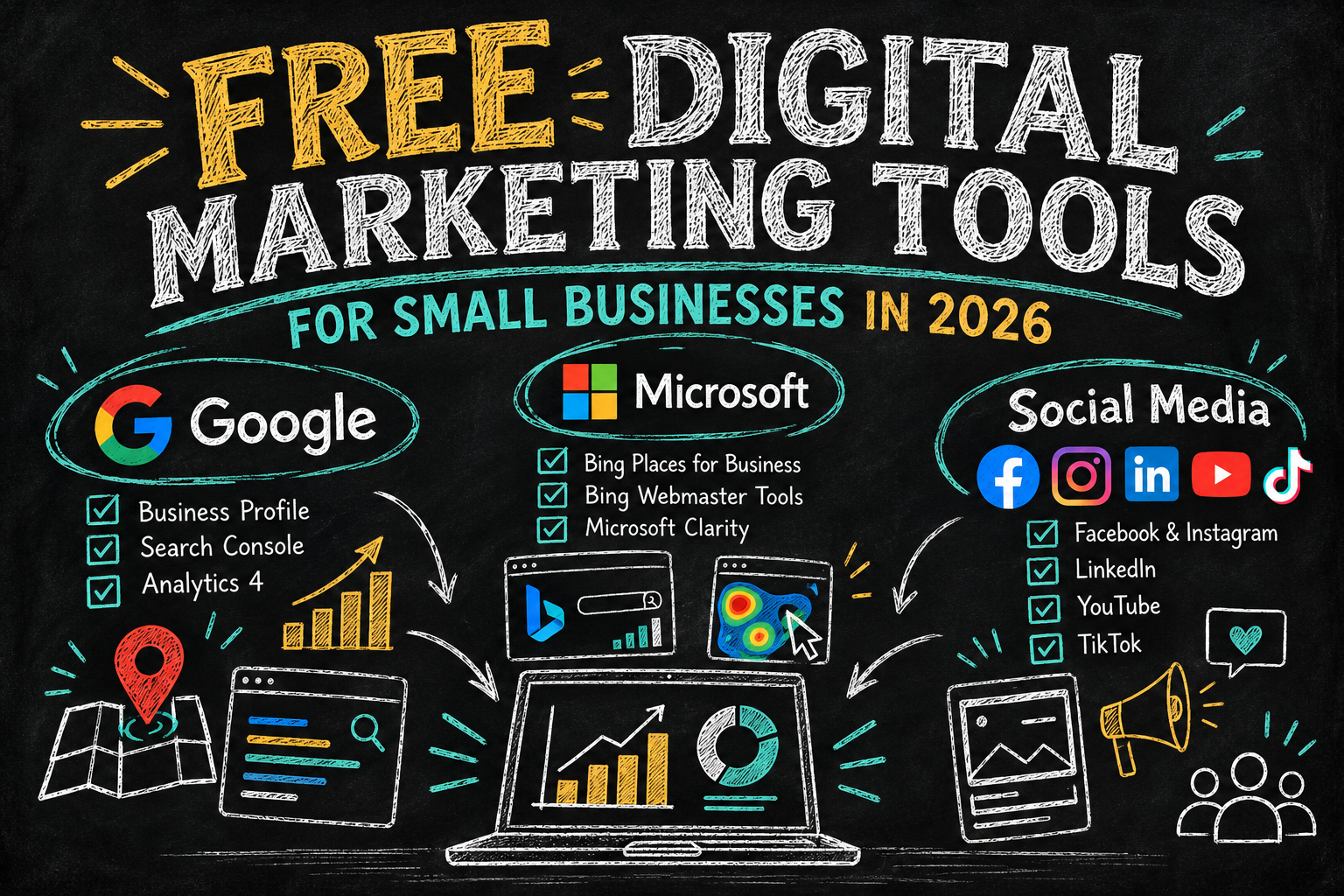
How Google, Microsoft, and Social Media Can Help Businesses Increase Visibility, Attract Customers, and Make Smarter Marketing Decisions
For small businesses, digital marketing doesn't always require a significant advertising budget. Some of the most valuable marketing resources available today are offered at no charge by platforms businesses already use every day.
Google, Microsoft, and major social media platforms provide tools that help businesses improve their online visibility, understand customer behavior, build relationships, and identify new opportunities for growth.
While paid advertising remains an important component of a comprehensive marketing strategy, these tools can provide a strong foundation for businesses looking to expand their digital presence.
Here are some of the most useful free digital marketing tools businesses should consider incorporating into their marketing strategy.
Google: Build Visibility and Understand Your Customers
Google offers several tools that help businesses become more discoverable, monitor website performance, and understand how customers find and interact with their websites.
1. Google Business Profile
Google Business Profile is one of the most valuable resources available to businesses serving local customers.
A properly optimized profile helps eligible businesses appear in Google Search and Google Maps when potential customers search for relevant products or services.
Businesses can use their profiles to:
- Display contact information, business hours, and locations.
- Share photos, updates, and important announcements.
- Respond to customer reviews.
- Provide links to websites and other customer resources.
- Monitor customer interactions through available performance insights.
Why it matters: For businesses that depend on local customers, a well-maintained Google Business Profile can help generate calls, website visits, and customer inquiries without requiring an advertising investment.
2. Google Search Console
Google Search Console provides insight into how a website performs in Google's organic search results.
Business owners and marketers can identify:
- Search queries that generate website impressions and clicks.
- Pages receiving organic search traffic.
- Average search positions and click-through rates.
- Technical issues affecting Google's ability to crawl or index website content.
- Opportunities to improve search visibility.
Why it matters: Understanding which searches bring visitors to a website can help businesses refine their content, improve search engine optimization (SEO), and identify opportunities to reach additional customers.
3. Google Analytics 4 (GA4)
Google Analytics helps businesses understand what happens after someone visits their website.
The platform provides information about:
- Website traffic and visitor engagement.
- Traffic sources, including organic search, social media, referrals, and paid advertising.
- Popular website pages and content.
- Important customer actions, including form submissions and purchases when properly configured.
- Marketing channels contributing to business results.
Why it matters: Google Analytics helps businesses move beyond simply counting website visitors. It provides the information needed to evaluate marketing effectiveness and make better decisions about where to invest time and resources.
Microsoft: Expand Your Search Visibility
Google may dominate many conversations about search marketing, but Microsoft provides valuable tools that businesses shouldn't overlook.
4. Bing Places for Business
Bing Places for Business allows eligible businesses to manage their presence in Microsoft's Bing search ecosystem.
Much like Google Business Profile, Bing Places helps businesses provide accurate information to customers searching for local products and services.
Features include:
- Managing business names, addresses, and contact information.
- Updating business hours and other listing details.
- Adding photos and relevant business information.
- Managing location listings.
Why it matters: Customers don't exclusively use Google. Maintaining accurate business information across multiple search platforms helps businesses reach additional audiences and improves their overall digital presence.
5. Bing Webmaster Tools
Bing Webmaster Tools provides website owners with insights into their performance on Microsoft's search engine.
Businesses can use the platform to:
- Monitor organic search performance.
- Identify search queries driving website traffic.
- Review website indexing and technical SEO issues.
- Submit sitemaps.
- Identify opportunities for improving website visibility.
Bing Webmaster Tools also supports website discovery and indexing capabilities that complement Google Search Console.
Why it matters: Businesses investing in SEO should monitor their visibility across more than one search engine. Bing Webmaster Tools provides another source of valuable performance data at no additional software cost.
6. Microsoft Clarity
Microsoft Clarity is a free website behavior analytics tool that helps businesses better understand how visitors interact with their websites.
Unlike traditional analytics platforms that focus primarily on traffic and engagement metrics, Clarity provides visual insights into website behavior.
Features include:
- Session recordings showing how visitors navigate a website.
- Heatmaps highlighting areas where visitors click and scroll.
- Insights into user behavior and potential usability problems.
- Tools for identifying friction in the customer experience.
Why it matters: Attracting visitors is only part of digital marketing. Understanding why visitors do—or don't—take action can help businesses improve landing pages, increase conversions, and make better use of existing website traffic.
Social Media: Build Relationships and Reach New Audiences
Social media continues to provide businesses with opportunities to connect directly with prospective customers without relying exclusively on paid advertising.
Although organic reach varies by platform, consistent content and audience engagement can help strengthen brand awareness and customer relationships.
7. Facebook and Instagram Business Tools
Meta Business Suite provides businesses with tools to manage their Facebook and Instagram presence.
Available capabilities include:
- Publishing and scheduling organic posts.
- Managing messages and comments.
- Reviewing audience engagement and content performance.
- Monitoring page and account activity.
- Coordinating content across Facebook and Instagram.
Why it matters: Businesses can maintain an active social presence, communicate with customers, and evaluate content performance using tools available within Meta's business platform.
8. LinkedIn Company Pages
LinkedIn offers businesses an opportunity to build credibility, share industry expertise, and connect with professional audiences.
A LinkedIn Company Page allows businesses to:
- Publish company updates and industry insights.
- Share educational articles and thought leadership.
- Highlight employees, accomplishments, and company news.
- Engage with customers, partners, and prospective employees.
- Monitor follower growth and content engagement.
Why it matters: LinkedIn can be particularly valuable for B2B organizations, professional services, educational institutions, and companies with longer customer decision cycles.
9. YouTube
YouTube provides businesses with a platform for publishing educational, promotional, and informational video content.
Businesses can use YouTube to:
- Publish product demonstrations and tutorials.
- Share customer testimonials.
- Answer frequently asked questions.
- Highlight company expertise.
- Monitor video performance through YouTube Analytics.
Why it matters: Video can help businesses explain complex products and services, build credibility, and reach audiences through both YouTube and Google Search.
10. TikTok Business Accounts
TikTok offers businesses another opportunity to reach audiences through short-form video content.
Business accounts provide access to features such as:
- Publishing organic video content.
- Monitoring audience engagement and video performance.
- Identifying popular content formats and trends.
- Building awareness through educational and entertaining content.
Why it matters: For businesses targeting audiences that actively consume short-form video, TikTok can provide an additional organic marketing channel without requiring an initial advertising budget.
Making These Tools Work Together
The greatest value of these platforms comes from using them as part of a coordinated marketing strategy rather than treating each one independently.
For example, a business might use Google Business Profile and Bing Places to improve local visibility, Google Search Console and Bing Webmaster Tools to monitor search performance, and Google Analytics to understand how visitors engage with its website.
Microsoft Clarity can then help identify website usability issues that may be preventing visitors from becoming customers.
Meanwhile, Facebook, Instagram, LinkedIn, YouTube, and TikTok can support brand awareness, customer engagement, and ongoing content distribution.
Together, these tools provide a foundation for a more informed and measurable digital marketing program.
Free Tools Are Valuable, but Strategy Still Matters
Although these platforms offer valuable capabilities without subscription fees for their core features, using them effectively requires planning, consistency, and ongoing analysis.
A business may have access to extensive website analytics but still struggle to interpret the data. Likewise, maintaining multiple social media accounts provides limited value without a clear content strategy and an understanding of the intended audience.
Businesses should focus on a few essential questions:
- Which platforms are most likely to reach our ideal customers?
- How are potential customers discovering our business?
- What actions are visitors taking after reaching our website?
- Which marketing activities contribute to qualified leads and sales?
- Where are we missing opportunities to improve performance?
The answers can help determine where additional resources, expertise, or advertising investments will have the greatest impact.
The Weboganic Perspective
At Weboganic, we believe effective digital marketing begins with understanding how businesses are discovered, how prospective customers engage with them, and what ultimately motivates those customers to take action.
As a Google Premier Partner, our team works with businesses and organizations to develop digital marketing strategies that combine search visibility, paid advertising, social media, and performance analytics.
Free marketing tools provide an excellent starting point. However, turning the information they generate into measurable business growth requires experience, thoughtful execution, and continuous optimization.
Whether your business is just beginning to establish its online presence or looking to improve an existing marketing program, the right combination of tools and strategy can make a meaningful difference.
Want to Get More From Your Digital Marketing Efforts?
Contact Weboganic to discuss how a coordinated digital marketing strategy can help your business improve visibility, attract qualified prospects, and generate measurable results.