
If your strategy still relies heavily on third-party cookies, you’re already behind.
Here’s what’s changing—and what you need to do about it.
What’s Actually Happening to Third-Party Cookies?
Major browsers have been phasing out third-party cookies:
- Safari and Firefox already block them by default
- Google Chrome (the last major holdout) is completing its phase-out
At the same time:
- Privacy laws (GDPR, CCPA, etc.) are tightening
- Users are more conscious about tracking
- Platforms are limiting data sharing
Bottom line: Passive tracking is disappearing.
Why This Matters for Your Marketing
Without third-party cookies, you lose:
- Cross-site tracking
- Precise retargeting capabilities
- Detailed attribution models
- Audience data from external sources
This impacts:
- Paid ads performance
- Conversion tracking accuracy
- Personalization at scale
Many marketers are already seeing:
- Higher acquisition costs
- Less reliable analytics
- Smaller retargeting audiences
The Shift to First-Party Data
The future of marketing is data you own.
First-party data is collected directly from your audience:
- Website interactions
- Email subscribers
- CRM data
- Purchase history
Why it matters:
- More accurate
- Privacy-compliant
- Fully under your control
5 Strategies to Win in a Cookieless World
1. Build Your Email List Aggressively
Your email list is now one of your most valuable assets.
Focus on:
- Lead magnets (guides, templates, tools)
- Clear value exchange
- Strong landing pages
2. Invest in High-Quality Content
Content is no longer just for SEO—it’s for data capture and trust.
Create:
- In-depth blog posts
- Gated resources
- Educational content that drives signups
3. Use Server-Side Tracking
Client-side tracking is becoming unreliable.
Switch to:
- Server-side tagging (Google Tag Manager server-side)
- Enhanced conversions
- First-party tracking setups
This improves data accuracy and future-proofs analytics.
4. Leverage Owned Channels
Rely less on rented platforms.
Double down on:
- Email marketing
- SMS (where appropriate)
- Private communities (Slack, Discord, etc.)
5. Rethink Paid Advertising
Paid ads still work—but the approach must evolve.
Focus on:
- Contextual targeting instead of behavioral
- First-party audiences (email uploads, CRM lists)
- Creative quality over hyper-targeting
Measurement Is Changing Too
Attribution is getting less precise—and that’s okay.
Shift toward:
- Blended attribution models
- Incrementality testing
- Marketing mix modeling (MMM)
Stop obsessing over perfect tracking—it doesn’t exist anymore.
The Opportunity Most Marketers Are Missing
This shift isn’t just a challenge—it’s an advantage.
Brands that win will:
- Build direct relationships with their audience
- Prioritize trust and transparency
- Create real value instead of relying on tracking shortcuts
While others scramble to replace cookies, you can build a stronger, more sustainable marketing engine.
Final Thoughts
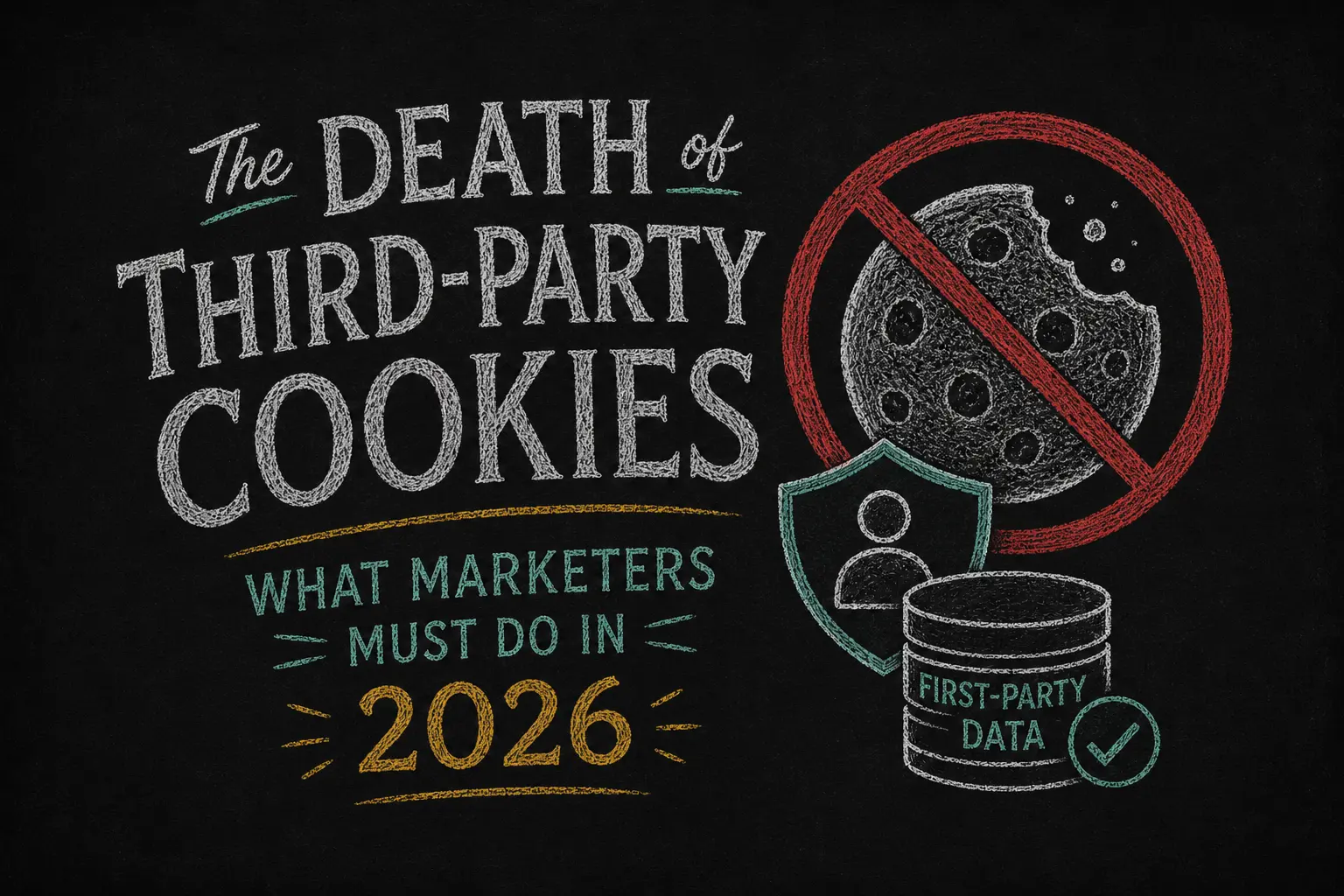
The death of third-party cookies marks a fundamental shift in digital marketing.
The question isn’t whether you’ll adapt—it’s how fast.
Start focusing on:
- First-party data
- Owned audiences
- Better content and experiences
Because in 2026, the brands that own their audience will own their future.