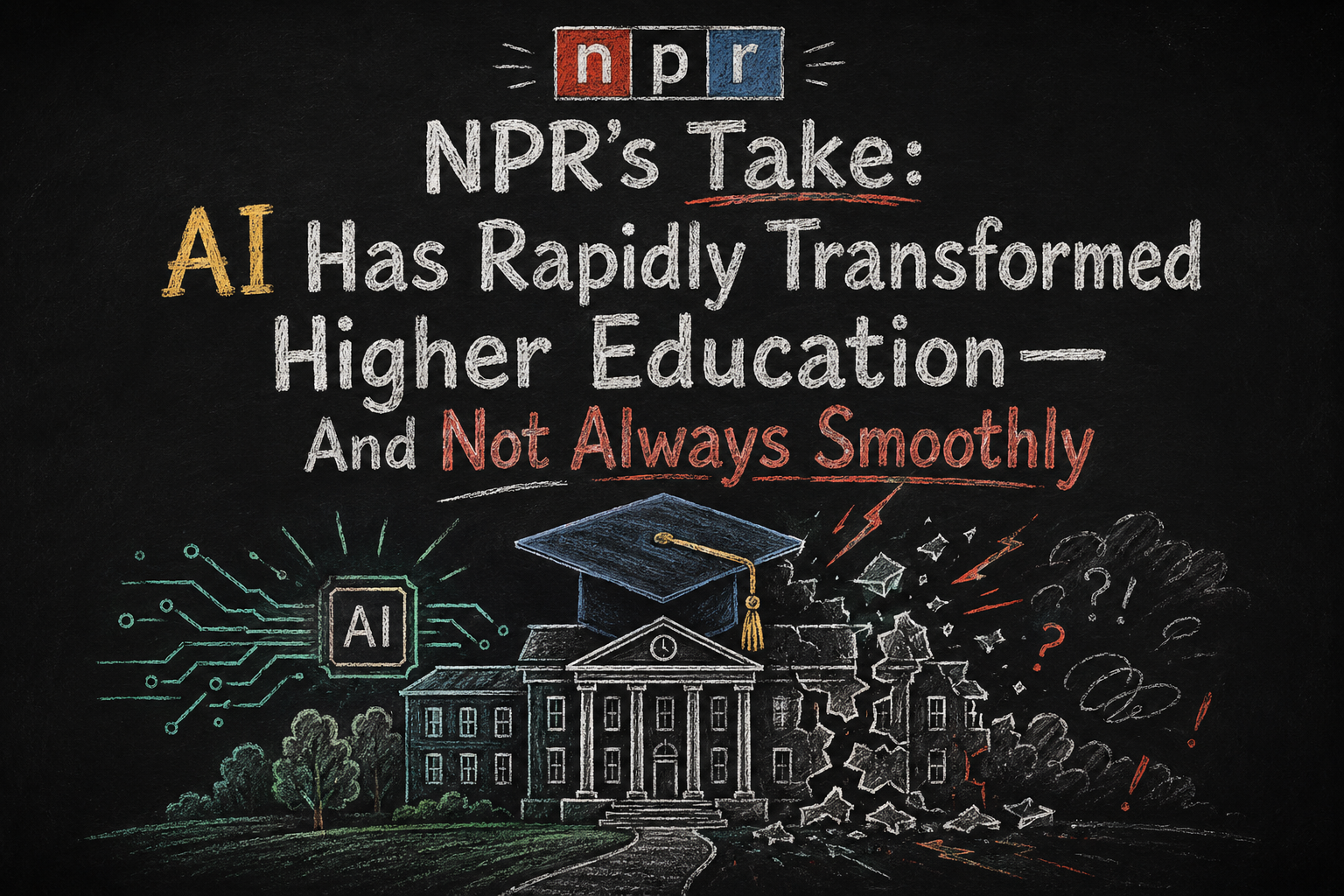

AI’s Explosive Adoption
Since ChatGPT launched in late 2022, it has spread through higher education faster than most administrators anticipated. Students use it as:
- A study tool
- A research assistant
- A writing and coding support system
- In some cases, a shortcut to completing assignments Surveys referenced in the reporting suggest a large majority of students have used generative AI in coursework. Many describe it as a learning support tool, while a notable portion admit to using it to complete assignments directly.
Voices from Students and Professors
Student Anxiety: What Does AI Mean for Learning and Jobs? A computer science student described feeling uncertain about whether his skills would remain valuable in a world where AI can generate functional code in seconds. This anxiety reflects a broader concern across campuses: if AI can replicate core technical tasks, what is the value of traditional skill development?
Experimenting with AI’s Capabilities
A Vanderbilt professor tested ChatGPT by giving it his final exam.
- An earlier version of ChatGPT scored below the class average.
- By 2025, newer versions scored in the low 80s. The takeaway was not that AI outperforms students, but that it is improving rapidly and approaching professional-level competence in some areas.
University Leaders: Where Should Students Focus?
Some university leaders argue that institutions must shift emphasis away from purely technical output and toward distinctly human capabilities. Fordham University’s president noted changes in student demand for certain technical majors and emphasized the importance of skills such as:
- Ethical reasoning
- Empathy
- Complex problem-solving
- Judgment
- Creativity These are areas where AI currently struggles or lacks authenticity.
The Ethical and Pedagogical Divide
Faculty responses to AI vary widely.
Approach 1: Embrace and Teach Responsible Use Some instructors incorporate AI into coursework intentionally. They design assignments where AI can assist with brainstorming or outlining, but require students to demonstrate independent analysis and critical thinking.
Approach 2: Restrict or Resist Other professors worry that AI undermines the learning process itself. If students outsource thinking too early, they may never develop foundational cognitive skills. One analogy used in the reporting compares AI to bringing a forklift to the gym. The work gets done, but the muscle may not develop.
Key Tensions Highlighted by NPR
- AI as a learning accelerator Students can explore ideas more quickly and test concepts efficiently.
- AI and academic integrity Institutions are still defining what constitutes acceptable use versus misconduct.
- Human skills with lasting value Universities are reassessing what differentiates human graduates from machine outputs.
- AI’s role in assessment Exams and writing assignments are being redesigned to reflect AI’s capabilities.
- AI and the job market Entry-level technical tasks may shrink, while creativity, leadership, and interdisciplinary thinking grow in value.